Understanding ISO 9001:2015 in Paint Production
For any construction project, consistency is critical. When a contractor buys 500 litres of paint, every single bucket must have the exact same shade, viscosity, binding strength, and drying time. That is where ISO 9001:2015 certification comes in.
ISO 9001 is the international standard that specifies requirements for a Quality Management System (QMS). In the paint manufacturing industry, this system monitors every single step—from testing raw acrylic resin materials to automated batch mixing and storage logs. Gujarat is India's leading industrial manufacturing corridor, but only a handful of paint factories in regional zones like Jamnagar, Rajkot, and Ahmedabad maintain active ISO certificates for their formulation labs.
Why Standardized Chemistry Matters for Indian Climates
Indian walls are exposed to severe weather: summer heat reaching 48°C, heavy coastal humidity, and driving monsoon rainfall. In these conditions, generic or uncertified chemical paints degrade within months, leading to paint peeling, blistering, and color fading. An ISO-certified manufacturer follows strict laboratory protocols:
- PVC Calibration: Ensuring the correct Pigment Volume Concentration ratio so the paint film has enough binder to hold onto the wall.
- Biocide Controls: Adding calibrated quantities of dry-film biocides to prevent black mold and moss formation during humid monsoon months.
- UV Absorbers: Formulating exterior emulsions with high-durability acrylic polymers that reflect solar rays instead of absorbing them.
NeuriGum Paints: ISO-Certified Excellence in Jamnagar
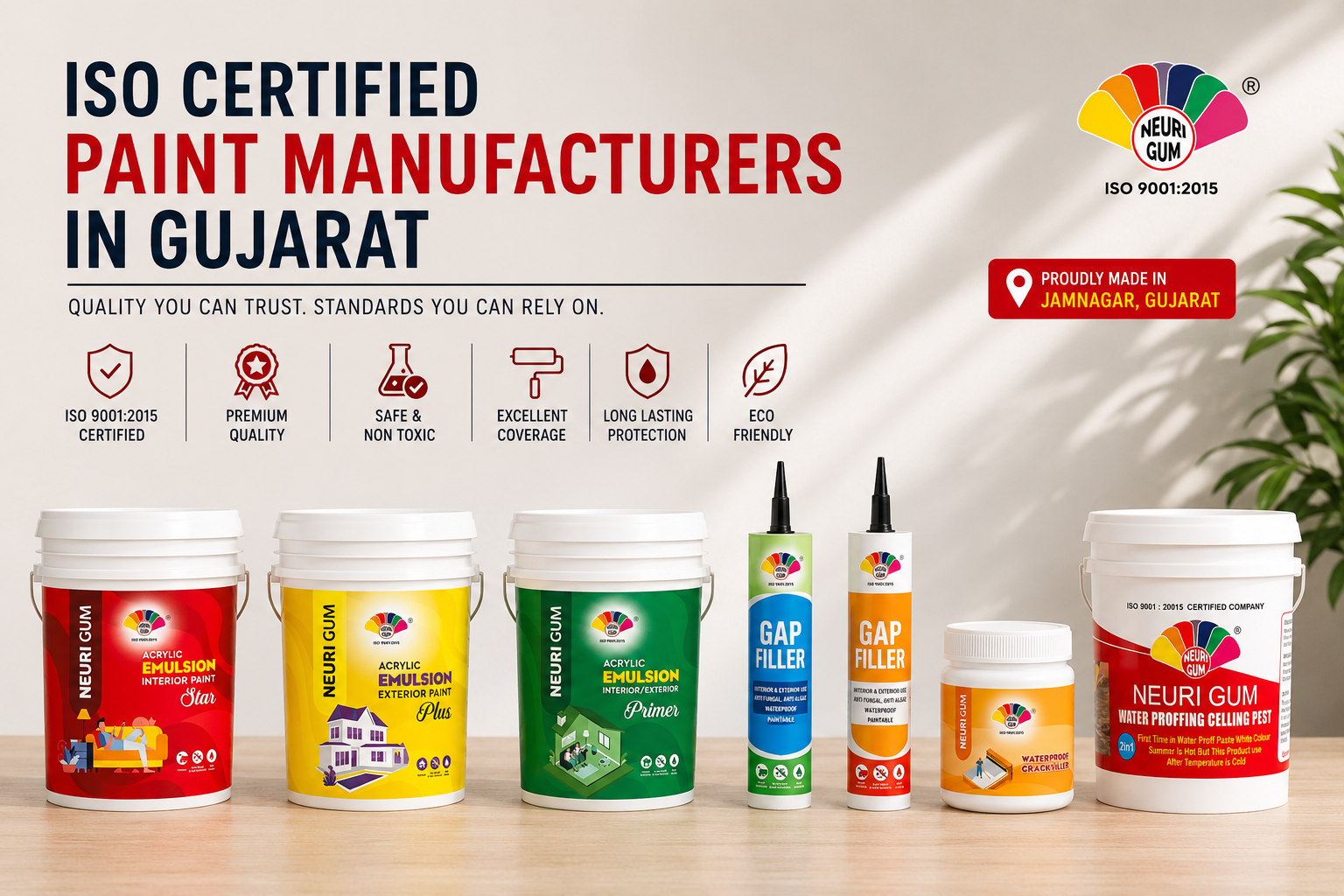
Based in Jamnagar GIDC, NeuriGum Paints (neurigumpaints.in) is proud to be an ISO 9001:2015 certified manufacturer. Every batch of our interior acrylic emulsions, exterior weather-proof coatings, and high-adhesion silicone sealants is processed under standardized controls. By purchasing directly from an ISO-certified regional plant, contractors and builders enjoy premium quality standard paint at direct wholesale rates, saving up to 35% on procurement overheads.